Average Cost of Assisted Living in Ossining, NY
A practical guide to CareScout’s 2025 cost medians, monthly fee inclusions and financial questions for families considering assisted living in Ossining.
Families researching the average cost of assisted living in Ossining, NY, often need a dependable starting point before they request quotes. According to CareScout’s Cost of Care Survey 2025, the monthly median for assisted living in the New York Area is $9,450. CareScout uses that metro region for Westchester County, including Ossining. It is a regional benchmark, not an Ossining-only median or a price quoted by Victoria Home.
No separate Ossining metro median is available in the survey, so this guide uses the New York Area figure and identifies it clearly. A median is the midpoint of reported prices, not a promise of what a particular person will pay. Room arrangements, support needs and residence policies can move an individual quote in either direction. Families should call Victoria Home directly for current rates and request a written estimate that states its assumptions.
How to read the average cost of assisted living in Ossining, NY
CareScout reports medians rather than a single average bill. Its 2025 cost-of-care figures provide the following monthly and annual comparisons. The annual column helps families consider a full-year budget alongside income, savings and insurance benefits, while the monthly column matches the way residences commonly discuss fees.
| Area | Monthly median | Annual median |
|---|---|---|
| New York Area | $9,450 | $113,400 |
| New York State | $7,110 | $85,320 |
| United States | $6,200 | $74,400 |
The New York Area monthly median is $2,340 higher than New York State’s median and $3,250 higher than the national median. On an annual basis, the metro benchmark is $113,400, compared with $85,320 statewide and $74,400 nationally. These are survey comparisons, not estimates of future increases, and they do not explain why prices differ. They also do not mean that every Ossining residence charges near the metro midpoint.
What a monthly assisted living fee usually includes
Assisted living generally combines housing with services, but there is no universal monthly package. A quoted rate may cover a room or apartment, meals, housekeeping, laundry, activities and some assistance with daily routines. The details matter: a residence may include a set service package while billing separately for additional personal support, medication-related assistance or other individualized needs.
Ask for a written service schedule rather than relying on a verbal summary. Clarify which supplies, transportation arrangements, personal laundry, guest meals and outside appointments are included. Also ask whether the quote reflects an assessed care level and what happens if that assessment changes. Two similar-looking monthly rates can represent substantially different combinations of housing and support.
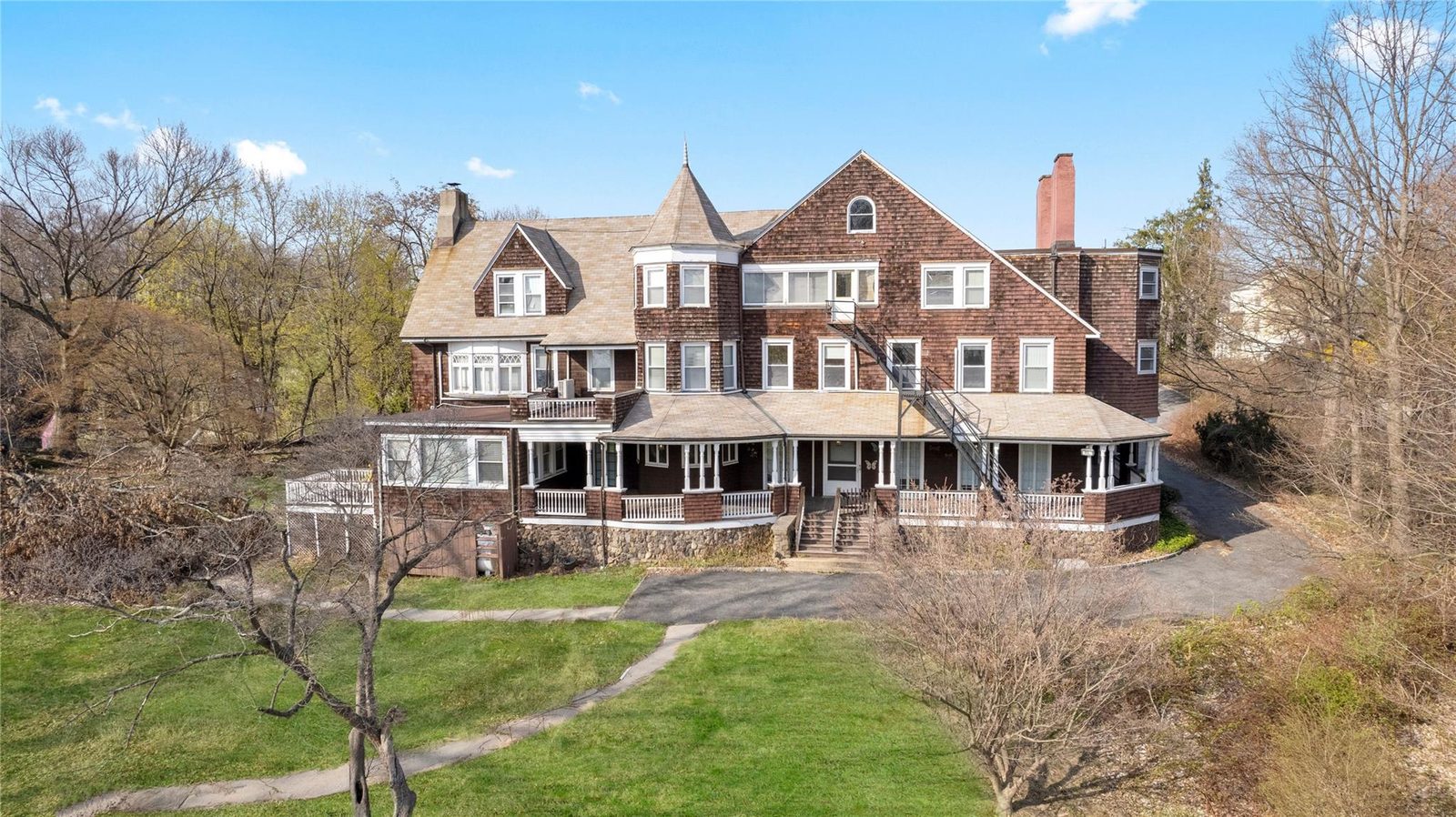
Victoria Home offers assisted living as an adult care residence in a historic Hudson-side building overlooking the Hudson River. That description does not establish a standard price or service package. Families can read about assisted living in Ossining, then ask the residence which services apply to their situation and which charges could appear separately.
Why individual quotes vary
Room type is one source of variation. A private arrangement may be priced differently from shared accommodation, and size, layout and location within a building can also matter. Review the available suites alongside the written fee schedule so that the housing portion of a quote is clear. Furnishings, storage, accessibility and the practical suitability of the space deserve the same attention as its appearance.
Care level is another major factor. Someone who needs occasional reminders may receive a different quote from someone who needs regular hands-on help with bathing, dressing or mobility. Ask how the initial assessment is performed, who reviews it and whether a temporary change in needs affects billing.
The setting itself also shapes comparisons. A small residential home and a large community may organize dining, activities, common space and services differently. A lower base rate is not directly comparable if important support is billed separately. Conversely, a higher rate is not automatically better value. Compare the complete expected monthly charge for the same person and the same list of needs.
Questions to ask about rate increases
A current quote answers only part of the budgeting question. Families also need to understand how charges can change after admission. Request clear answers, preferably in writing, to these questions:
- When did the current rate schedule take effect, and how often is it reviewed?
- How much advance notice is given before a general rate increase?
- Are increases tied to a standard schedule, operating costs or an individual reassessment?
- What changes in care needs can trigger a new care-level charge?
- Will the residence provide an updated written estimate before a new rate begins?
- How is billing handled during a hospital stay, a family visit or another extended absence?
- Which charges come from outside providers rather than appearing on the residence’s invoice?
It is also reasonable to ask about prior rate adjustments and whether any required deposits or initial charges are refundable. Keep the answers with the admissions paperwork. When comparing options, use quotes prepared for the same care assumptions and distinguish a general increase from a change caused by additional support.
How home care, adult day care and nursing homes compare
Price comparisons are most useful when they reflect comparable amounts of supervision. CareScout’s New York Area figures list a non-medical in-home caregiver rate of $37 per hour. At its standard schedule of 44 hours a week, monthly in-home care is $7,055. The metro assisted living median is $2,395 higher. At 20 hours a week, estimated in-home care is $3,207 monthly; continuous coverage at 168 hours a week is $26,936.
Limited home-care hours may cost less than residential care, but that does not make the arrangements equivalent. The home-care figures do not include the full cost of housing, food, utilities, maintenance or supervision outside the caregiver’s schedule. Adult day health care is listed at $144 daily and $3,120 monthly. It can provide daytime support, but it is not a substitute for overnight residential supervision.
CareScout lists a New York Area nursing home semi-private room at $14,448 monthly and $173,375 annually. A private room is $15,969 monthly and $191,625 annually. Those monthly rates are respectively $4,998 and $6,519 above the assisted living median. Nursing homes and assisted living serve different needs, so the comparison should begin with the appropriate setting rather than price alone.
Ways families may pay for assisted living
Medicare’s long-term care guidance says that Medicare does not cover long-term custodial care when that is the only care needed. Most long-term care is custodial. Families should therefore not assume that Medicare will pay an ongoing assisted living residential bill, even when a person also receives separately covered health services.
Long-term care insurance may help, depending on the policy. The Administration for Community Living’s insurance overview explains that covered services can include assisted living. Benefits commonly begin after an elimination period and when the policyholder needs help with activities of daily living or has cognitive impairment. Check benefit limits, covered settings, documentation requirements and exclusions with the insurer.
VA Aid and Attendance can increase a pension for qualifying wartime-era Veterans or surviving spouses who need help with daily activities or meet other listed conditions. Effective December 1, 2025, the maximum annual pension rates with Aid and Attendance are $29,093 for a Veteran with no dependents and $34,488 for a Veteran with one dependent. If countable income were zero, the monthly equivalents would be $2,424 and $2,874.
Those amounts are not automatic flat payments toward assisted living. Pension generally equals the applicable maximum rate minus countable income, although qualifying unreimbursed medical expenses can affect that calculation. The VA’s current pension-rate guidance lists a net worth limit of $163,699 for December 1, 2025 through November 30, 2026. VA also reviews certain asset transfers before a claim, so individual guidance is important.
New York licensing and Medicaid context
New York’s licensing categories help families understand what a residence is authorized to provide. The State Department of Health’s adult care facility overview explains that an Assisted Living Residence is an adult home or enriched housing program with additional ALR licensure. Enhanced certification addresses aging in place with more care, while Special Needs certification is for people with dementia. A category name alone does not establish a residence’s price, availability or suitability.
Families considering Victoria Home should confirm its current license category, admissions criteria and available services directly. This is especially important when needs are changing, because a statewide definition cannot substitute for an individualized discussion about whether a residence can appropriately support a prospective resident.
The state’s consumer guide to Assisted Living Residences notes that Medicaid generally does not pay to live in an ALR. A separate Assisted Living Program operates in some adult homes and enriched housing programs. It serves people medically eligible for nursing home placement who can be supported in a less intensive setting, combining residential and home care services. Prior authorization and periodic reassessment are required; eligibility and local participation should never be assumed.
Building a realistic Ossining budget
The average cost of assisted living in Ossining, NY, is best used as a starting benchmark, followed by an individualized written quote. Before comparing residences, list the person’s current routines, likely support needs, preferred room arrangement and services that would otherwise require separate help. Then compare complete monthly estimates, possible care-level changes and the terms governing future increases.
Local logistics also belong in the decision. Relatives traveling from Croton-on-Hudson, Briarcliff Manor, Tarrytown or elsewhere in Westchester County may consider visiting patterns and travel alongside the Hudson Valley setting and Metro-North Hudson Line. A practical choice balances affordability, an appropriate living environment and clear admissions terms. The regional median supplies context; a current quote with plainly stated services supplies the number a family can actually budget around.
Frequently asked questions
What is the average monthly cost of assisted living in Ossining, NY?
CareScout does not publish an Ossining-only median. For Westchester County, it uses the New York Area, where the 2025 assisted living median is $9,450 per month and $113,400 per year. New York State’s medians are $7,110 per month and $85,320 per year, while the national figures are $6,200 and $74,400. A median is a planning benchmark, not a quote. Any current Victoria Home rate should be requested directly, with services and care assumptions stated in writing.
How much higher is the Ossining-area benchmark than state and national medians?
CareScout’s New York Area assisted living median is $2,340 higher per month than the New York statewide median and $3,250 higher than the U.S. median. Those comparisons describe the survey medians; they do not establish the cause of the gap or predict an individual Ossining quote. Room type, care level and what a residence includes can all change a written estimate. Compare complete service lists rather than treating a base monthly rate as the whole cost.
Does Medicare pay for assisted living in Ossining?
Medicare does not cover long-term custodial care when that is the only care needed, and most long-term care is custodial. That limitation applies in Ossining just as it does elsewhere. Families should not assume that assisted living room, board or ongoing help with daily activities will be paid by Medicare. A separately covered health service has its own rules and does not automatically pay the residential bill. Review the specific coverage and ask for a written explanation of charges.
Can VA Aid and Attendance help an Ossining Veteran pay for assisted living?
VA Aid and Attendance can increase a VA pension for eligible wartime-era Veterans or surviving spouses who need help with daily activities or meet other qualifying conditions. The maximum annual pension rates are $29,093 for a Veteran with no dependents and $34,488 for a Veteran with one dependent. If countable income were zero, their monthly equivalents would be $2,424 and $2,874. These are not automatic flat payments toward an Ossining residence. Eligibility, countable income, net worth and VA review affect the actual pension.
What should families ask Victoria Home about assisted living prices?
Ask Victoria Home for its current rates in writing and for a list of what the quoted monthly fee includes. Confirm how care needs are assessed, when a care-level charge can change, which services are billed separately and how much notice accompanies a rate increase. Also ask about billing during a hospital stay or other absence. Families should confirm the residence’s current license and admissions criteria directly. The New York Area median provides context, but only an individualized written quote describes the expected charge.
Talk with Victoria Home
If you are weighing care options in Ossining, call (914) 941-2450 or schedule a tour. Our team can talk through current availability, rates and next steps. Please confirm all details directly, since published figures and listings change over time.
Sources
- CareScout Cost of Care Survey 2025
- VA Aid and Attendance and Housebound benefits
- VA pension rates (current)
- Medicare: long-term care coverage
- ACL: What is long-term care insurance
- New York State DOH: Adult Care Facility services
- NYS DOH Consumer Guide: Assisted Living Residence (PDF)
- NYS Medicaid: Assisted Living Program (ALP)
Cost figures are 2025 medians from the CareScout Cost of Care Survey and are not quotes for Victoria Home. Program rules and benefit amounts were checked on the linked official pages in November 2026 and can change.