Assisted Living vs In-Home Care Costs in Ossining, NY
A practical comparison of CareScout benchmarks, caregiver schedules, and hidden household expenses for Ossining families weighing assisted living and care at home.
For families comparing assisted living vs in-home care cost in Ossining, NY, the most useful question is not simply which monthly number is lower. It is how much help is needed, who provides it, and which household expenses remain. A part-time caregiver schedule, substantial family involvement, and continuous paid supervision create very different budgets, even when each arrangement is described as home care.
The cost benchmarks below come from the CareScout Cost of Care Survey 2025, with data collected from July through November 2025. CareScout places Westchester County in its New York Area region. That broad metro figure is useful for planning, but it is not an Ossining-only average, a quote, or a statement of what any particular residence charges.
Assisted living vs in-home care cost in Ossining, NY: local benchmarks
CareScout reports a New York Area assisted living monthly median of $9,450, or $113,400 annually. A median is a market reference point, not a guaranteed price. Apartment type, care needs, services included, and community policies can all affect an actual residence agreement.
The following table places that median alongside several home and institutional care benchmarks. The home care figures describe paid caregiver time, not the full cost of maintaining a household. Nursing home rows represent a different setting and should not be read as assisted living prices.
| Care type or schedule | Benchmark | How to read it |
|---|---|---|
| Assisted living | $9,450 monthly | $113,400 annually; metro median |
| Non-medical in-home caregiver | $37 hourly | Hourly rate before other household expenses |
| In-home care at 20 hours per week | $3,207 monthly | Part-time planning estimate |
| In-home care at 44 hours per week | $7,055 monthly | CareScout’s standard monthly scenario |
| In-home care at 168 hours per week | $26,936 monthly | Around-the-clock hourly care |
| Adult day health care | $3,120 monthly | $144 daily rate |
| Nursing home, semi-private room | $14,448 monthly | Different setting and level of care |
| Nursing home, private room | $15,969 monthly | Different setting and level of care |
How caregiver hours change the home care budget
The New York Area non-medical caregiver rate is $37 an hour. At 20 hours a week, the monthly planning estimate is $3,207. CareScout’s standard 44-hour scenario is $7,055 a month, according to the same CareScout survey. These schedules leave different amounts of time without a paid caregiver present.
At 44 hours a week, the assisted living metro median is $2,395 higher than the home care monthly scenario. That difference does not make the two arrangements equivalent. Families should map which mornings, evenings, weekends, and nights are covered, then identify who handles meals, housekeeping, transportation, supervision, and unexpected schedule gaps.
Continuous hourly care changes the comparison sharply. The 168-hour scenario is $26,936 a month. It is included to show the effect of paying for around-the-clock coverage, not to suggest that every person needs that schedule. Some households combine relatives, paid caregivers, and adult day services; each combination needs its own coverage plan and backup arrangements.
Compare the setting and the fee, not just the total
The New York Area assisted living median is higher than both the statewide and national benchmarks. CareScout lists $7,110 monthly statewide and $6,200 nationally. The metro figure is $2,340 higher than the statewide median and $3,250 higher than the national median in the CareScout cost survey. Those comparisons describe markets, not value or suitability for an individual.
A residence fee should be examined line by line. Ask which services are included, how personal care is assessed, whether charges change when needs change, and what requires an outside provider. Also ask about staffing, meals, laundry, transportation, activities, and any additional supervision. Do not assume that a service associated with assisted living generally is included at a particular address.
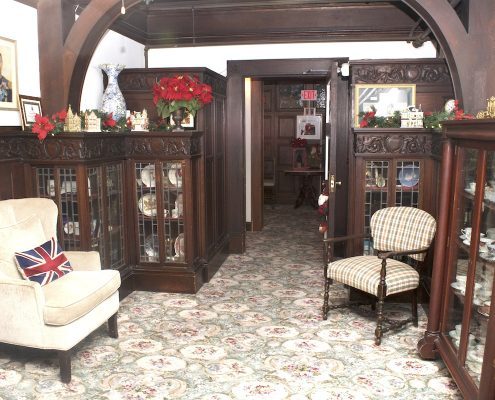
Families can review the basics of assisted living in Ossining before preparing questions. Victoria Home is at 25 N Malcolm St in Ossining and offers assisted living in an adult care residence housed in a historic Hudson-side building overlooking the Hudson River. For current rates, families should call Victoria Home at (914) 941-2450 and request a clear explanation of fees, services, licensing, and admissions criteria.
The less visible costs of remaining at home
A caregiver invoice rarely represents the entire financial and practical commitment of staying home. The house or apartment still has ordinary operating expenses, and relatives may take on work that does not appear in a care agency’s bill. A fair comparison should record these commitments without assigning arbitrary dollar values to them.
- Home accessibility: lighting, bathroom changes, railings, ramps, or other modifications may need consideration.
- Household operations: utilities, groceries, cleaning, repairs, supplies, and property maintenance continue.
- Transportation: appointments, errands, and social outings may require a driver, coordination, or paid service.
- Care coordination: someone may need to schedule caregivers, manage substitutions, communicate with providers, and respond to gaps.
- Family time: relatives may provide overnight presence, personal assistance, meal preparation, or supervision alongside paid care.
- Backup support: illness, severe weather, caregiver turnover, and changing needs can disrupt an otherwise workable routine.
Family travel deserves the same scrutiny. Relatives coming from Croton-on-Hudson, Briarcliff Manor, Tarrytown, or elsewhere in the Hudson Valley may have short trips on paper but limited availability during evenings or emergencies. Travel on the Metro-North Hudson Line can support visits, yet it does not replace a reliable plan for daily coverage.
Care fit, supervision, and New York licensing
Cost alone cannot determine whether a setting is appropriate. Consider the help needed with daily activities, the amount of supervision required, overnight concerns, social preferences, and the reliability of informal support. Home care preserves a familiar address, while residential care changes where daily support is organized. Neither general description guarantees a particular experience.
The New York State Department of Health adult care facility guidance explains that the state licenses adult homes and enriched housing programs. An Assisted Living Residence has additional licensing, and some residences hold Enhanced or Special Needs certification. Families should ask what a residence’s current license permits and confirm its admissions and discharge criteria rather than relying on broad labels.
Victoria Home is not a dedicated memory care community. When dementia is part of the discussion, ask specifically about supervision, daily structure, environmental support, and when another setting might be recommended. Memory care should be discussed as support and environment, not as a promise to improve or reverse symptoms.
Check payment sources without assuming coverage
The CareScout benchmarks describe market costs, not how a family will pay them. Medicare’s long-term care guidance states that Medicare does not cover long-term custodial care when that is the only care needed, and most long-term care is custodial. Families should not treat Medicare as a routine source of ongoing assisted living payment.
Long-term care insurance may help, depending on the policy. The Administration for Community Living’s insurance overview notes that benefits commonly depend on an elimination period and needs involving daily activities or cognitive impairment. Review benefit triggers, covered settings, payment limits, and claim procedures in the actual policy.
Wartime-era Veterans and surviving spouses may also want to examine VA Aid and Attendance. The current VA pension rates list a maximum annual pension rate with Aid and Attendance of $29,093 for a Veteran with no dependents and $34,488 for a Veteran with one dependent. If countable income were zero, the corresponding monthly figures would be $2,424 and $2,874. The listed net worth limit is $163,699. Countable income, certain unreimbursed expenses, and asset-transfer review rules affect eligibility and payment; these are not automatic residence subsidies.
Medicaid requires separate analysis. The New York consumer guide to Assisted Living Residences says Medicaid generally does not pay to live in an Assisted Living Residence. New York’s Assisted Living Program is a distinct Medicaid-funded option in some adult homes and enriched housing programs, with eligibility, authorization, and reassessment requirements. Availability must be verified for the particular setting.
Build an Ossining comparison that can be updated
Start with a written weekly schedule showing paid care, family coverage, and uncovered periods. Add household responsibilities, backup plans, and likely reasons the schedule could change. Use the same worksheet for a residence visit, marking which services are included and which would remain separate. This makes the assisted living vs in-home care cost comparison more useful than a single monthly subtotal.
Short-term help can also inform the decision. The National Institute on Aging’s respite care explanation describes relief through in-home services, adult day centers, or short residential stays; local availability must be confirmed. The Eldercare Locator can connect Westchester County families with local aging-service resources.
Families who want to see Victoria Home’s building and discuss admissions can schedule a tour. Bring the coverage worksheet, ask for current written fee information, and confirm licensing directly. A careful decision leaves room for changing needs while making today’s responsibilities, costs, and unanswered questions visible.
Frequently asked questions
Is in-home care always cheaper than assisted living in Ossining?
Not necessarily. Part-time paid care can have a lower monthly total than the New York Area assisted living median, but the comparison changes as caregiver hours increase. Ossining families should also account for household expenses, family-provided care, overnight coverage, and backup support. The key is to compare equivalent responsibilities and coverage, not simply two invoices with different services included.
Does the New York Area median show what Victoria Home charges?
No. CareScout’s New York Area median is a broad metro benchmark used for Westchester County, not a quote for Victoria Home or an Ossining-only average. Families should contact the residence for current rates and request written information about included services, additional charges, assessments, licensing, and admissions. That allows a direct comparison with a specific home care schedule.
Does Medicare usually pay for assisted living or ongoing custodial care at home?
Medicare does not cover long-term custodial care when that is the only care needed, and most long-term care is custodial. Ossining families should not assume that either assisted living or ongoing daily help at home will be routinely paid by Medicare. Review other possible sources separately, including insurance, VA benefits, and New York Medicaid programs, with eligibility confirmed for the individual and setting.
What should an Ossining family include in a home care cost worksheet?
Include paid caregiver schedules, uncovered mornings or nights, transportation, food, utilities, home maintenance, accessibility changes, and care coordination. Record the time relatives expect to provide and who can cover a missed shift. Then use the same categories during assisted living visits in Ossining or nearby Westchester communities. The goal is a realistic comparison of responsibilities, with assumptions that can be revised as needs change.
What should families ask about dementia support when comparing care options?
Ask about supervision, daily routines, environmental support, overnight needs, and the circumstances that could require a different setting. Victoria Home is not a dedicated memory care community, so families should confirm its current license, admissions criteria, and ability to support the individual. In New York, dementia-related residential licensing terms have specific meanings. No setting should be expected to promise improvement or reversal of symptoms.
Talk with Victoria Home
If you are weighing care options in Ossining, call (914) 941-2450 or schedule a tour. Our team can talk through current availability, rates and next steps. Please confirm all details directly, since published figures and listings change over time.
Sources
- CareScout Cost of Care Survey 2025
- VA Aid and Attendance and Housebound benefits
- VA pension rates (current)
- Medicare: long-term care coverage
- Eldercare Locator (U.S. Administration for Community Living)
- National Institute on Aging: What is respite care?
- ACL: What is long-term care insurance
- New York State DOH: Adult Care Facility services
- NYS DOH Consumer Guide: Assisted Living Residence (PDF)
- NYS Medicaid: Assisted Living Program (ALP)
Cost figures are 2025 medians from the CareScout Cost of Care Survey and are not quotes for Victoria Home. Program rules and benefit amounts were checked on the linked official pages in November 2026 and can change.